
TRENTON, N.J. — A sweeping New Jersey voting rights bill moved closer to becoming law Tuesday after the Senate Judiciary Committee approved the “John Lewis Voter Empowerment Act” in a 7-2 vote, setting off sharp partisan clashes over voter ID, state oversight and the role courts could play in local elections.
The legislation, already approved by the full Assembly, would expand protections for racial and language minorities in elections while creating a new state office tasked with enforcing voting rights laws. Republican lawmakers and conservative critics immediately attacked the proposal, arguing it could weaken local control and open the door to legal challenges against voter identification policies.
Assemblywoman Dawn Fantasia, a Sussex County Republican, accused Democrats of using the bill to centralize election authority in Trenton.
“Trenton Democrats are centralizing election power in Trenton, stripping authority from local boards of elections, and handing it to unelected officials and the court system,” Fantasia wrote Tuesday on X.
Supporters of the legislation, however, describe the measure as a state-level voting rights act designed to strengthen ballot access and prevent discriminatory election practices before they occur.
Bill Expands Court Oversight and Voting Rights Enforcement
The proposed law would give New Jersey courts broader authority to intervene in election systems found to violate the act’s protections.
Under the legislation, courts could order changes to election rules, redraw voting districts, expand governing bodies or shift election dates so local contests align with higher-turnout state or federal elections.
The measure would also establish a new Division of Voting Rights within the New Jersey Treasury Department. That office would oversee enforcement of the law in cases involving racial or language minority voting rights.
Another provision would require translated election materials in municipalities where at least 2% or 4,000 eligible voters speak a language other than English and have limited English proficiency.
Democratic supporters have framed the bill as an effort to modernize election protections and address barriers that can dilute minority voting power.
Republicans, meanwhile, argued the legislation gives courts and state officials too much influence over local election administration.
Key Points
• New Jersey Senate Judiciary Committee approved the voting rights bill in a 7-2 vote
• The proposal creates a new state Division of Voting Rights inside the Treasury Department
• Republicans claim the legislation could block voter ID rules and expand judicial control over elections
Republicans Focus on Voter ID Language
Much of the backlash centered on claims the legislation could be used to challenge voter ID requirements.
Fantasia called the bill “judicial activism on steroids” and argued it effectively labels voter identification laws as discriminatory.
“The real intent: It bans voter ID requirements by labeling them discriminatory,” Fantasia wrote.
The bill itself does not explicitly ban voter ID. However, critics argue its anti-discrimination provisions and expanded legal remedies could allow future court challenges against identification requirements if plaintiffs claim they disproportionately affect minority voters.
Fantasia also criticized provisions allowing state review of local election policies and argued municipalities could face lawsuits over decisions dating back decades.
“This garbage opens the door to endless lawsuits, shifting standards and politically-driven enforcement of election laws,” she wrote.
The legislation includes enforcement mechanisms allowing courts to impose remedies if election systems are found to violate the act.
Debate Reflects Broader National Voting Rights Battles
The New Jersey proposal arrives as voting laws remain a major national political issue ahead of the 2026 election cycle.
Democratic-led states in recent years have expanded mail voting, early voting and language access programs, while many Republican-led states have enacted stricter voter identification and election integrity laws.
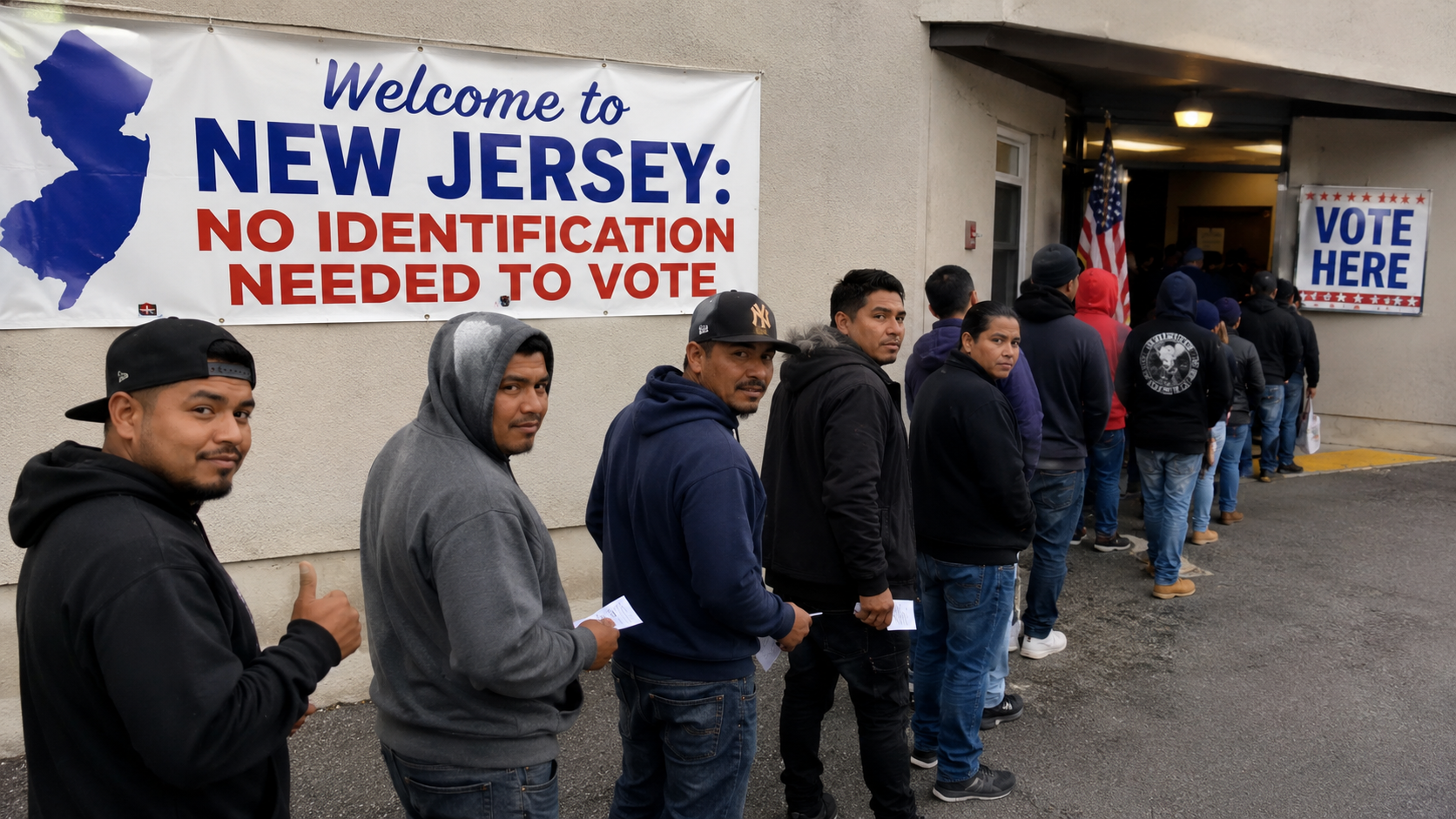
New Jersey currently does not require standard photo identification for most in-person voters, though first-time voters registering by mail may be asked to provide identification under federal law.
Supporters of the “John Lewis Voter Empowerment Act” say the bill mirrors protections found in the federal Voting Rights Act and is intended to guard against discriminatory election systems at the local level.
Opponents counter that New Jersey already maintains strong voter participation rates and argue the bill creates unnecessary legal exposure for municipalities.
Fantasia claimed statewide turnout data does not support allegations of widespread voter suppression.
“So what problem are we solving?” she wrote.
What Happens Next
Because the Assembly already passed the legislation, the bill now heads toward consideration by the full New Jersey Senate.
If approved there, it would move to Gov. Phil Murphy’s desk for possible signature.
The debate is expected to intensify as lawmakers, voting rights groups and local governments weigh the bill’s potential impact on election administration across the state.