
Washington, D.C. — A newly circulated FBI archival document is drawing renewed attention to how the U.S. military formally tracked and investigated “Flying Discs” during the early Cold War, revealing a detailed 1949 Air Force intelligence protocol for reporting unexplained aircraft sightings.
The 30-page file, labeled “Air Intelligence Requirements Memorandum Number 4,” outlines how military personnel, radar operators, intelligence officers, and even civilians were instructed to document sightings of “unconventional aircraft and unidentified flying objects, including the so-called ‘Flying Discs.’”
Dated Feb. 15, 1949, the memorandum originated from the Department of the Air Force Headquarters United States Air Force Directorate of Intelligence in Washington, D.C. The file was marked “RESTRICTED” and directed reports through Air Materiel Command at Wright-Patterson Air Force Base in Ohio — a location long tied to UFO speculation and military aviation research.
Rather than dismissing sightings outright, the document established a structured intelligence-gathering system designed to standardize reports involving unexplained aerial objects.
Air Force Required Detailed UFO Reporting
The memorandum instructed observers to collect highly specific information about sightings, including:
- exact time and date
- weather conditions
- altitude and speed
- shape, color, and apparent construction
- sound characteristics
- flight behavior and maneuvers
- radar observations
- photographs and physical evidence
The reporting requirements extended far beyond simple eyewitness testimony. Investigators were directed to assess witness credibility, determine whether radar tracked the object, and compare sightings against known aircraft operating in the area.
One section specifically ordered personnel to evaluate whether the object demonstrated “erratic,” “evasive,” “aggressive,” or “oscillating” maneuvers. Another instructed observers to document whether the object disappeared behind obstacles, exploded, or faded from view.
The document also sought to rule out conventional explanations, requiring comparisons against commercial flights, military aircraft, balloons, astronomical phenomena, and experimental devices.
Key Points
• A 1949 Air Force intelligence memo detailed how officials should report “Flying Discs”
• The document required radar data, witness credibility checks, and physical evidence collection
• Wright-Patterson Air Force Base served as a central reporting hub for sightings
Wright-Patterson Named as Central Collection Point
The file repeatedly references Wright-Patterson Air Force Base in Dayton, Ohio, instructing commands to route reports through the installation’s Air Materiel Command. The base has remained central to decades of UFO conspiracy theories, particularly surrounding alleged government retrieval and analysis programs.
According to the memo, intelligence officials wanted rapid transmission of reports “by means of electrical transmission immediately after sighting” whenever possible. Supplementary reports were to follow as additional information became available.
The memorandum also distributed reporting responsibilities across major Air Commands, overseas Air Attaches, and non-Air Force agencies, including the FBI, Naval Intelligence, and the Coast Guard.
At the time, the U.S. military faced mounting public fascination and media coverage surrounding unexplained aerial sightings following the post-World War II “Flying Saucer” wave that began in 1947.
Cold War Fears Shaped Early UFO Investigations
The document reflects how seriously intelligence agencies treated aerial unknowns during the early Cold War period, when concerns over Soviet technology, espionage, and experimental aircraft heightened military sensitivity to unexplained activity in U.S. airspace.
While modern UFO discussions often focus on extraterrestrial theories, many early investigations centered on national security and aviation threats.
The memo directed investigators to determine whether nearby military testing activity or “guided missile” operations could explain reported sightings. It also requested local weather reports, wind data, and nearby aircraft schedules to eliminate conventional causes.
Investigators were further instructed to secure photographs, terrain sketches, and any physical fragments linked to sightings whenever possible.
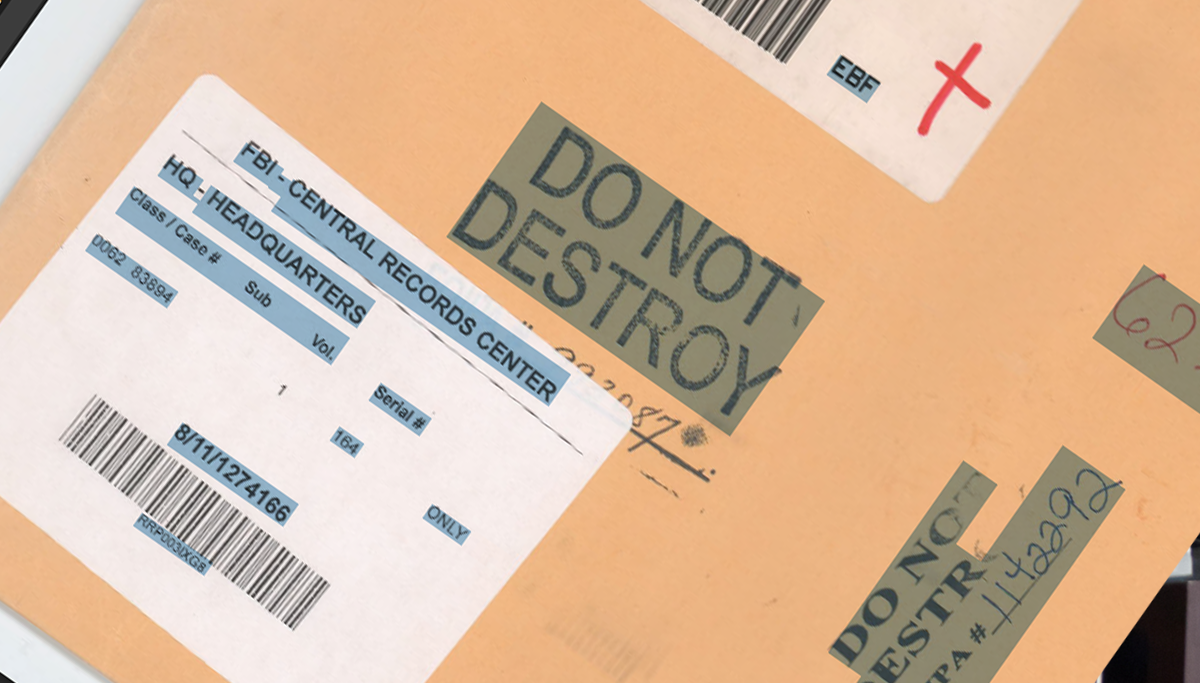
The file appears multiple times within the scanned archive, suggesting duplication or repeated preservation of the same memorandum in FBI records.
Public Interest in UAP Files Continues Growing
The resurfacing of the 1949 intelligence document arrives amid heightened national interest in government disclosures involving Unidentified Anomalous Phenomena, or UAPs — the modern term now used by federal agencies instead of UFOs.
Congressional hearings, military pilot testimony, and Pentagon investigations have pushed decades-old records back into public view as researchers continue examining how the government historically handled unexplained aerial encounters.
Although the memorandum does not confirm extraterrestrial activity, it demonstrates that the Air Force created a formal investigative framework for unexplained sightings more than 75 years ago.
The archival FBI file remains publicly accessible through declassified government records.